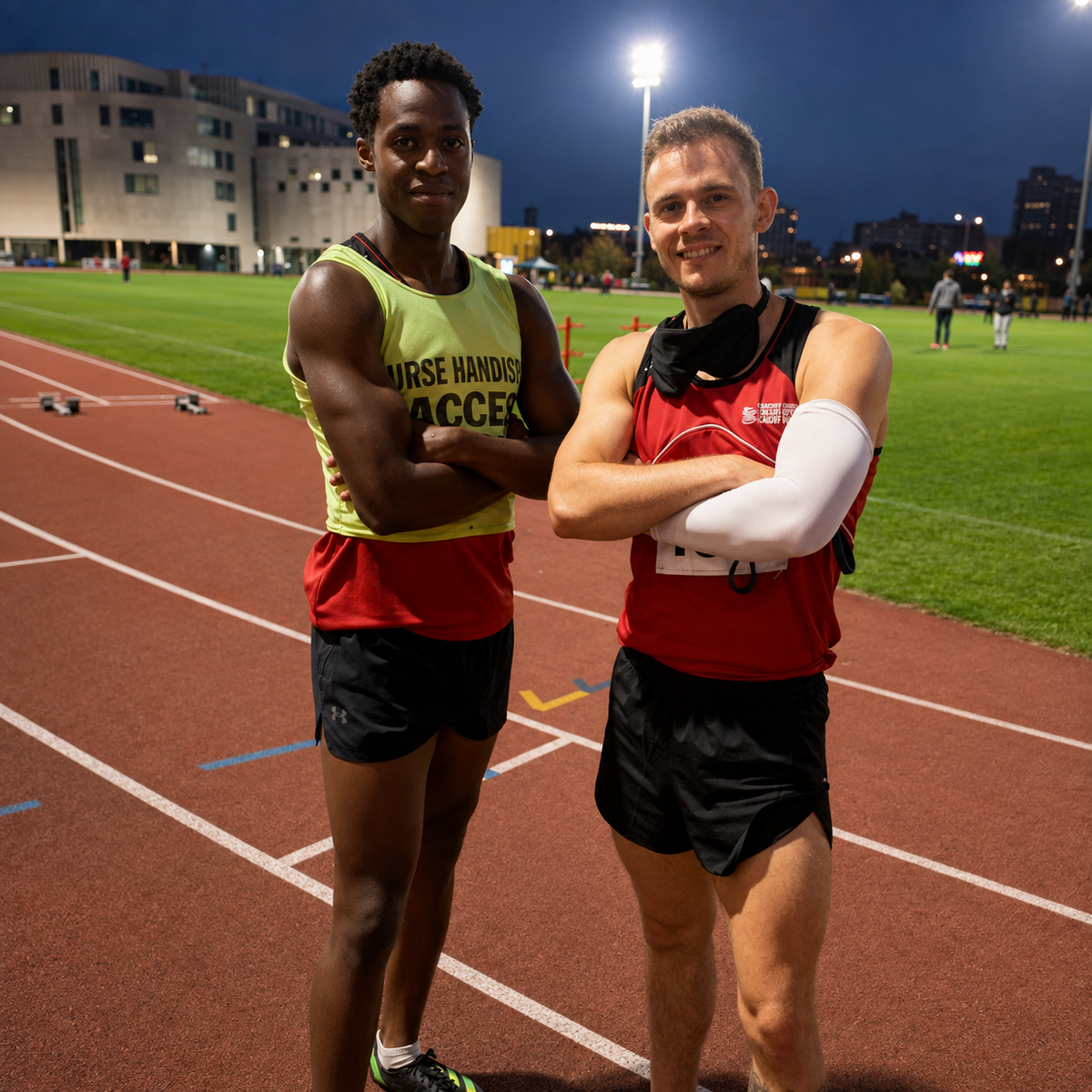
Trust
At sprinting speed, there isn't time to continually question what is happening. James has to trust the person beside him enough to run without hesitation.

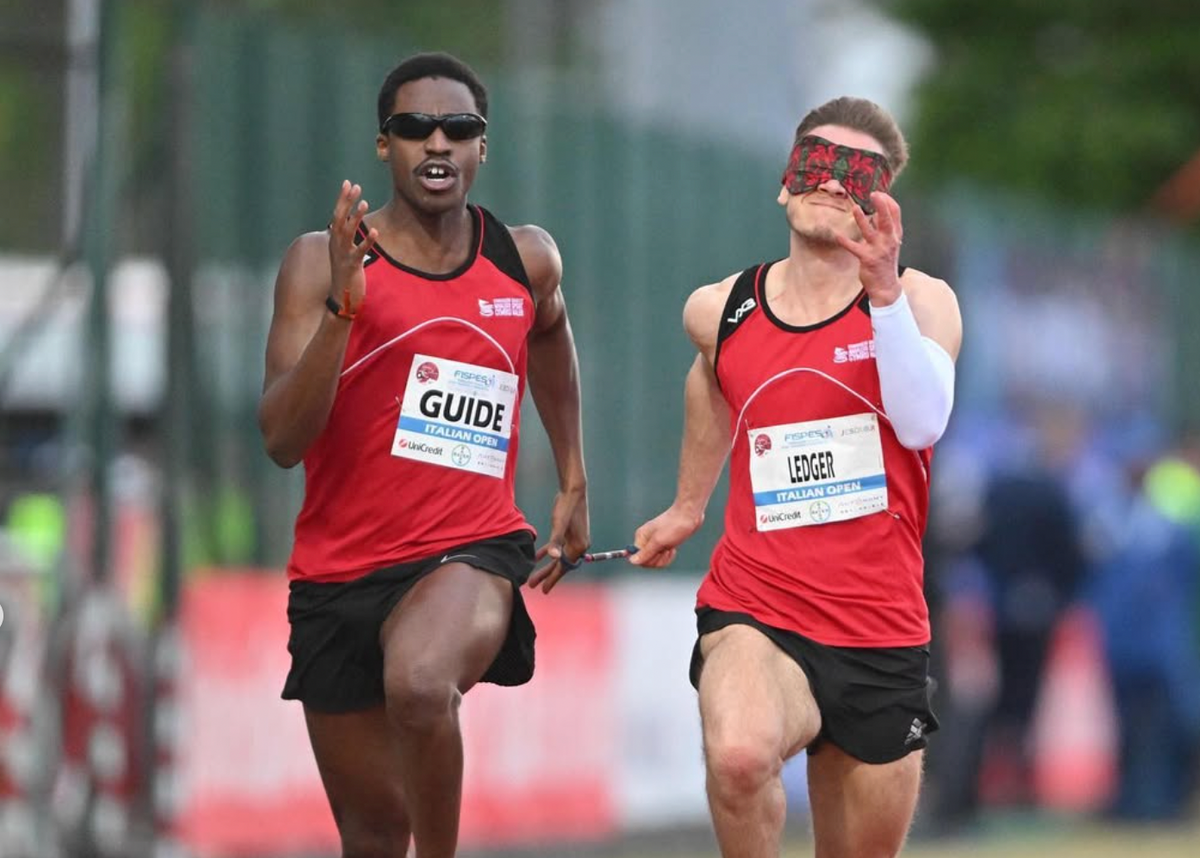
For visually impaired athletes like James Ledger, guide running is far more than simply having somebody running alongside them. At elite level, it is a highly skilled athletic partnership built on speed, communication, rhythm and absolute trust.
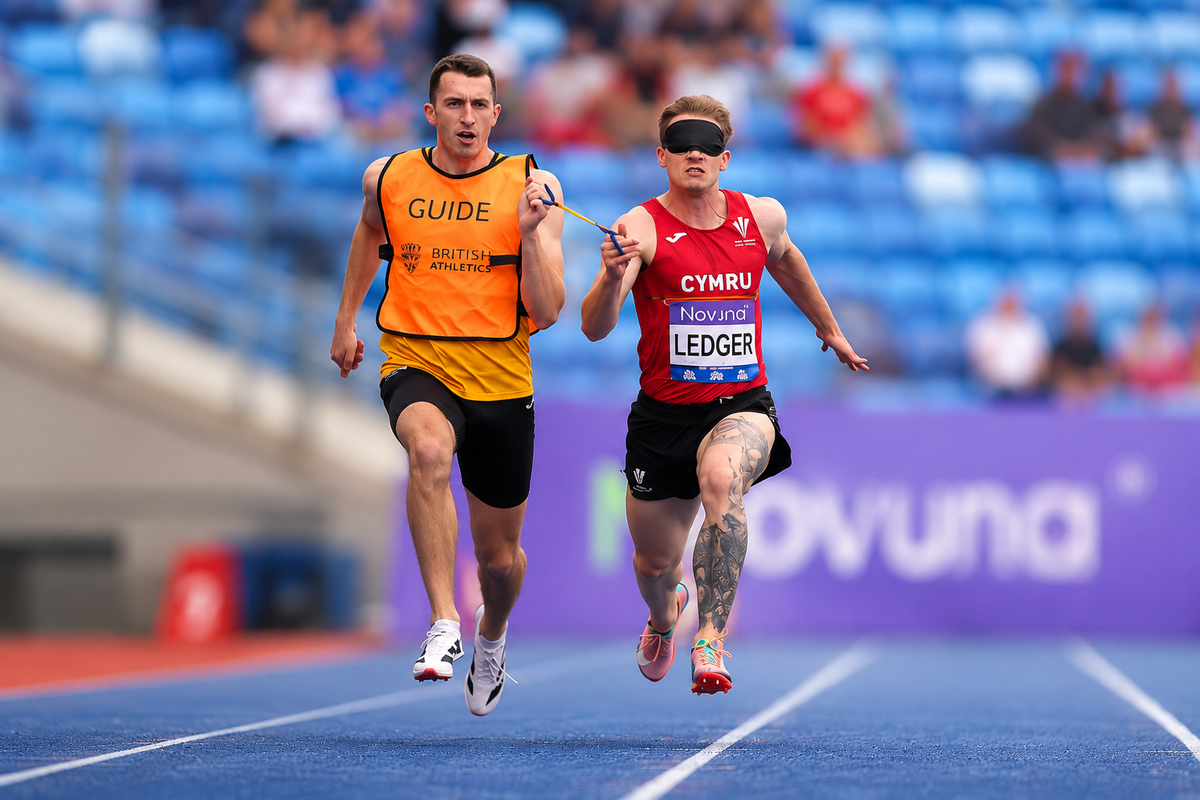
James competes in the T11 classification. In T11 races, athletes compete wearing an approved blindfold and must run with a guide runner. Athlete and guide race alongside one another, connected by a tether, with verbal communication also permitted. For James, that guide isn't on the sidelines supporting his performance. They are part of the performance.
A guide runner enables a visually impaired athlete to compete safely and at their full athletic potential.
During a race, the guide runs alongside the athlete while the pair remain connected by a short tether between their hands or arms. The guide can communicate verbally, helping with orientation and information while both athletes maintain their speed and rhythm.
Importantly, a guide cannot pull or propel the athlete. This isn't one runner helping another to run faster. It is two highly trained athletes learning to move together so precisely that, when the gun goes, the partnership works almost instinctively.
At James' level, this means:
That synchronisation doesn't happen overnight. It is developed through hours of training together.
For James, access to the right guide runner has a direct impact on his ability to train, compete and pursue his ambitions.
When Welsh Athletics publicised James' search for a guide in 2023, he explained the importance of the role simply:
“Without a guide runner I can’t follow my dreams.”
At the time, James was looking for a sprinter capable of running 10.7 seconds or faster over 100m, illustrating just how high the athletic standard required of an elite sprint guide can be.
James has represented Wales internationally, competed at World Para Athletics Grand Prix events and continued to pursue success at the highest level. Behind those performances isn't just one athlete's preparation — there is a partnership that has to be developed alongside it.
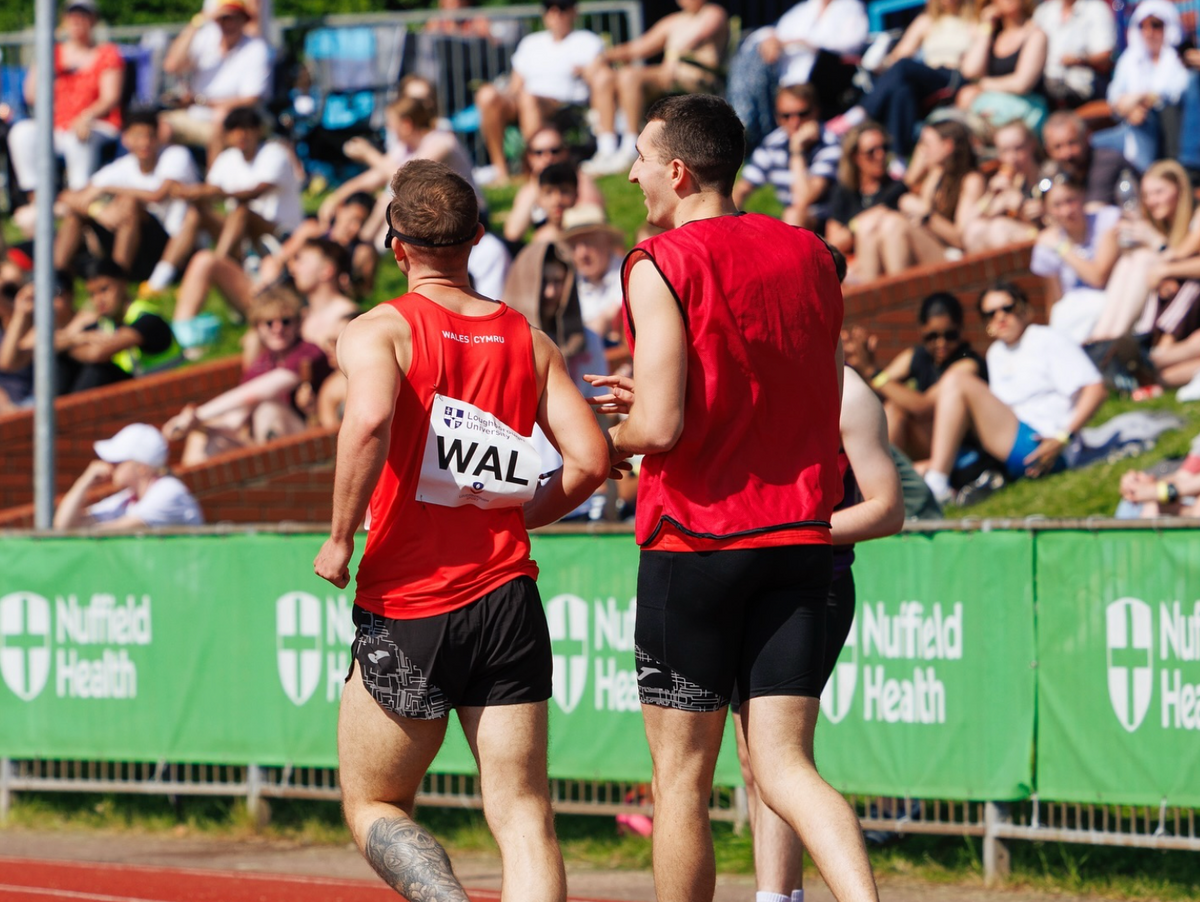
One of the biggest misconceptions around guide running is that the guide is simply there to provide assistance.
At elite level, that significantly understates the role. Guide runners need exceptional speed, fitness and technical ability. They must be capable of producing their own performance while simultaneously adapting it to another athlete.
In major competition, the partnership is formally recognised too. At World Para Athletics Championships, for example, guides of medal-winning visually impaired athletes can also receive medals.
It reinforces an important point:
Guide running is a partnership, not an act of assistance.
The physical connection between James and his guide may be small, but what sits behind it is enormous.
At sprinting speed, there isn't time to continually question what is happening. James has to trust the person beside him enough to run without hesitation.
The pair need a shared understanding of what information is needed, when it is needed and how it should be communicated.
Two talented runners can still make an ineffective partnership if their movement doesn't work together. Stride length, cadence, arm action and acceleration all have to become synchronised.
A guide runner is an athlete too. They train, travel and compete alongside James and have to be capable of running quickly enough that the guide never becomes the limiting factor in James' performance.
Guide runners make competitive running accessible to visually impaired athletes at every level, from people taking their first steps into running through to athletes competing internationally.
Yet many runners may never have considered becoming one.
Greater awareness means more people understanding the role, more athletes learning how to guide and ultimately more opportunities for visually impaired people to participate in running.
In Wales, Run Wales and Welsh Athletics offer guide-running support and workshops, developed with Disability Sport Wales and with input from Guide Dogs Cymru. There is also a register designed to connect visually impaired runners with trained guides.